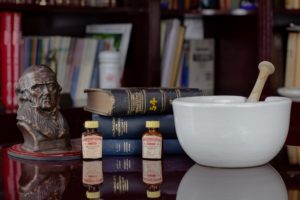
Historical Foundations of Homeopathy
Homeopathy has been practiced for more than 200 years and was developed in the late 1700s by German physician Dr. Samuel Hahnemann. His work emerged from a scientific curiosity: he observed that the body has an inherent ability to restore internal balance when given the right type of stimulus. This insight led to the foundational principle of homeopathy and shaped it into a complete system of individualized care.
Core Scientific Principles
At the center of homeopathy is the concept that the body is not passive; it is constantly working to maintain equilibrium. Homeopathy aims to support these natural regulatory processes rather than override them.
Two key principles guide the system:
- Individualization — treatment is tailored to the person’s unique patterns, not just isolated symptoms.
- Stimulus‑response — remedies are selected to gently encourage the body’s own self‑regulating mechanisms.
This systems‑oriented perspective aligns with modern understandings of mind‑body interaction and individualized health patterns.
How Homeopathic Remedies Are Prepared
Homeopathic remedies are derived from natural sources such as plants and minerals. They undergo a standardized preparation method known as serial dilution and succussion:
- A natural substance is diluted in precise, stepwise proportions.
- Each dilution is followed by vigorous shaking (succussion).
- This process creates highly diluted preparations that are generally well‑tolerated.
Because of their gentle nature, many individuals feel comfortable integrating homeopathic remedies alongside conventional medical care.
A Whole‑Person, Systems‑Oriented Framework
Homeopathy distinguishes itself through its broad, integrative perspective. Instead of focusing on a single symptom, it examines:
- Physical tendencies
- Emotional responses
- Stress patterns
- How the body expresses imbalance over time
This whole‑person approach allows practitioners to understand health as a dynamic interplay between physical, emotional, and environmental factors.
Why People Choose Homeopathy
Many individuals turn to homeopathy because it offers:
- A gentle, non‑invasive approach
- Highly individualized care
- Support for both emotional and physical well‑being
- A complementary option alongside conventional medicine
For many, homeopathy provides a framework that acknowledges the complexity of their health journey and supports them in a balanced, integrated way.